Are Sweeteners Bad for You? The Truth About Artificial Sweeteners
Sugar has disappeared from plenty of soft drinks. Sweetness hasn’t.
Pick up a can labelled “diet”, “low sugar” or “zero” and you might find ingredients like aspartame, sucralose or acesulfame K doing the sweetening instead.
Which raises a pretty obvious question: are sweeteners bad for you?
Artificial sweeteners have been part of our food and drinks for decades, but there’s still plenty of debate around them. Are they safe? Are they actually better than sugar? And does “no sugar” automatically mean healthier?
The answer isn’t quite as simple as sweeteners being good or bad. So, let’s look at what they actually are, why they’re used and what the latest guidance says.
Are sweeteners bad for you?
Let’s start with the question you came here for.
Sweeteners approved for use in Great Britain have to undergo safety assessments before they can be added to food and drink. Within established limits, approved sweeteners are considered safe to consume.
But ‘safe to consume’ and ‘something we should consume more of’ aren’t really the same thing.
Both the World Health Organisation (WHO) and the UK’s Scientific Advisory Committee on Nutrition (SACN) have looked at the role non-sugar sweeteners play in our diets. They don’t agree on every part of the evidence, but neither recommends simply swapping lots of sugar for lots of sweetener as the long-term goal.
So, are sweeteners bad for you? There isn’t really a dramatic yes or no answer. Approved sweeteners are considered safe, but that doesn’t automatically make a diet full of sweetened food and drinks a good idea either.
A bit less exciting than some of the headlines. Probably more useful, though.
What are artificial sweeteners?
Basically, artificial sweeteners are ingredients used to make food and drinks taste sweet without using sugar.
They’re often much sweeter than sugar itself, so only small amounts are needed, and they can provide sweetness with fewer or no calories.
You’ll find them in everything from fizzy drinks and desserts to chewing gum, sauces and other low-sugar products.
Some of the sweeteners you might spot on UK ingredients lists include:
|
Sweetener |
E number |
Often found in |
|
Acesulfame K |
E950 |
Soft drinks and reduced-sugar foods |
|
Aspartame |
E951 |
Diet and zero-sugar drinks |
|
Saccharin |
E954 |
Food, drinks and tabletop sweeteners |
|
Sucralose |
E955 |
Drinks, sauces and reduced-sugar products |
|
Steviol glycosides |
E960 |
Food, drinks and tabletop sweeteners |
You might also hear terms like “non-sugar sweeteners”, “low or no-calorie sweeteners” and “sugar substitutes”. They aren’t all exactly the same thing, but they have one thing in common: keeping things sweet without relying on sugar.
Why are artificial sweeteners used in soft drinks?
We’ve spent years talking about the amount of sugar in soft drinks. And with good reason. Reducing the amount of sugar we consume remains part of UK dietary guidance.
But take the sugar out of a traditionally sweet drink and there’s a decision to make.
Make it less sweet, or find something else to sweeten it.
Often, it’s the second option.
Artificial and non-sugar sweeteners allow drinks to keep that familiar sweet taste while containing little or no sugar, and usually fewer calories.
Which is why “zero sugar” and “unsweetened” aren’t the same thing.
The sugar might have disappeared. The sweetness probably hasn’t.
Are artificial sweeteners safe?
T his is where things can get a bit muddled.
Asking if artificial sweeteners are safe isn’t quite the same as asking whether they’re good for you.
Before sweeteners can be used in food and drinks in Great Britain, they undergo safety assessments. For many, acceptable daily intake levels are set too, essentially establishing how much can be consumed every day over a lifetime without an appreciable health risk.
So, simply declaring approved artificial sweeteners “dangerous” doesn’t reflect the evidence or current guidance.
The debate is a little more complicated than that.
So, why is there controversy around artificial sweeteners?
If approved sweeteners are considered safe, why are we still talking about them?
Most of the recent debate is actually about what happens when we swap sugar for sweeteners over the long term.
In 2023, the World Health Organization (WHO) recommended against using non-sugar sweeteners as a way to control weight or reduce the risk of noncommunicable diseases.
That came after its review found no clear evidence of long-term benefit, alongside observational evidence suggesting there could be undesirable effects from long-term use.
There’s an important bit of context here, though. WHO’s recommendation was conditional, partly because some of that evidence may be affected by other factors. It didn’t suddenly declare approved artificial sweeteners unsafe.
The UK’s SACN looked at the evidence too and interpreted some of it differently. Its conclusion? There isn’t currently enough consistent evidence to draw firm conclusions about sweeteners and long-term health outcomes.
But SACN still recommends minimising non-sugar sweeteners as a precaution, with the longer-term goal of reducing both sugar and sweeteners in our diets.
Different routes. Not a million miles apart on the destination.
Replacing lots of sugar with lots of sweetener probably isn’t the end goal.
Are sweeteners better than sugar?
It depends.
We know, annoyingly vague. But there’s a reason.
Replacing a sugary product with a low or no-calorie sweetened alternative can reduce the amount of sugar and calories you consume, which may be useful in the short to medium term.
But “zero sugar” isn’t another way of saying “healthy”.
Your overall diet matters. How much you consume matters. And what else is in the food or drink matters too.
There’s also another option that sometimes gets lost in the sugar-versus-sweetener debate:
Neither.
Rather than replacing sugar with another source of sweetness, we can also get used to food and drinks that simply taste less sweet.
What about aspartame?
Aspartame is one of the best-known artificial sweeteners and is used in a range of foods and drinks, including some diet and zero-sugar soft drinks.
Like other sweeteners approved for use in Great Britain, it has undergone safety assessment and is subject to rules around how it can be used.
It’s also had more than its fair share of headlines over the years, so there’s a lot more to unpack than we can sensibly squeeze into a paragraph here.
Want to know more? Read our guide to what aspartame is, where you’ll find it and why it’s used. What Is Aspartame?
Do zero-sugar drinks contain artificial sweeteners?
Often, yes. But not always.
“Zero sugar” tells you about the sugar content of a drink. It doesn’t really tell you whether something else has been used to make it taste sweet.
A lot of zero and diet soft drinks use artificial or non-sugar sweeteners instead. Others don’t.
The easiest way to know? Turn the can around.
The ingredients list will tell you far more than the biggest words on the front.
Can you get soft drinks without sugar or sweeteners?
Absolutely.
Taking sugar out of a drink doesn’t mean you have to replace it with another source of sweetness.
Sparkling waters and other drinks can use fruit extracts and natural flavours to bring flavour without recreating the intensely sweet taste of a traditional fizzy drink.
Which, conveniently, brings us to DASH.
Why DASH says no to sugar and sweeteners
At DASH, we’ve never thought the answer to removing sugar was simply finding another way to make drinks taste really sweet.
So, we don’t use either.
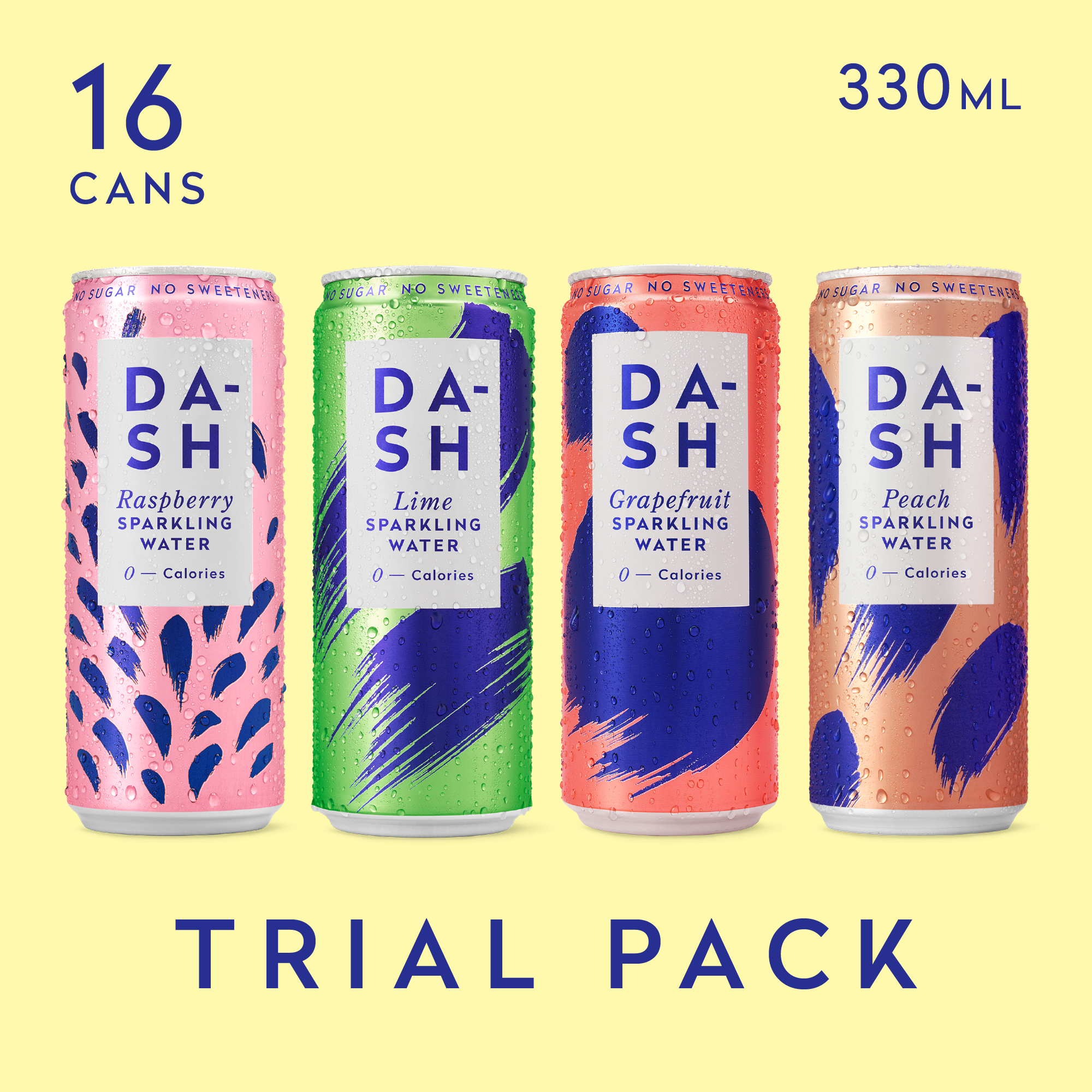
Our sparkling water contains no sugar and no sweeteners. Instead, we use spring water, bubbles and real, wonky fruit that might otherwise have gone to waste.
It’s not about sugar being the villain and sweeteners being the villain’s slightly suspicious mate. We just don’t think you need either to make a good drink.
No sugar. No sweeteners. Just fruit-infused sparkling water.
FAQs
Are artificial sweeteners bad for you?
Not necessarily. Artificial sweeteners approved for use in the UK are considered safe to consume. However, current guidance recommends keeping both sugar and sweeteners to a minimum where possible.
Which artificial sweeteners are commonly used in soft drinks?
Common sweeteners include aspartame, acesulfame K, sucralose, saccharin and steviol glycosides. Different drinks use different sweeteners, so check the ingredients list if you want to know exactly what’s inside.
Is aspartame an artificial sweetener?
Yes. Aspartame is an artificial sweetener used in some diet, reduced-sugar and zero-sugar foods and drinks.
Are sweeteners better than sugar?
Replacing sugar with a low or no-calorie sweetener can reduce sugar and calorie intake, which may be useful in some circumstances. However, current UK guidance recommends reducing free sugar while also minimising non-sugar sweeteners over the longer term.
Do zero-sugar drinks contain artificial sweeteners?
Many do, but not all. “Zero sugar” describes the sugar content, not whether a drink contains sweeteners. Check the ingredients list to find out.
Are there fizzy drinks without artificial sweeteners?
Yes. Not every fizzy drink needs sugar or artificial sweeteners. DASH sparkling water contains neither.